For International Visitors | Yoshimura Acupuncture & Massage Clinic, Fukuoka
Yakuin, Chuo-ku, Fukuoka, Japan
Japanese Acupuncture & Massage
for Visitors from Abroad
This page explains what I offer, what a session looks like, and how to arrange a visit if you are coming from outside Japan. Every session combines acupuncture (hari) with anma massage shiatsu — needles are never the only part of the treatment. It is written for someone who has never tried acupuncture before, or who has only known the Chinese style of it.
My English is limited. But a hand placed on the body can tell you a great deal, in any language. I have treated visitors from the United States, Europe, and elsewhere before, and I would be glad to welcome you.
What is “Hari”? (Japanese Acupuncture)
Very thin needles. Precise placement. No exaggeration.
Hari (鍼) is the Japanese word for acupuncture. Fine, sterile, single-use needles — about the thickness of a human hair — are placed at specific points in the muscle to release tension and improve circulation and nerve function. Most people feel a dull, brief sensation, not sharp pain.
I combine this with shiatsu massage (hands-on pressure therapy) in the same session, so the body is approached from two directions: needles for deep, localized release, and hands for reading the whole body and softening it before and after.
Curious what a needle actually does in the body? Read why acupuncture works →
Washin (和鍼) — the Japanese Approach
The real difference comes down to one small tool: a guide tube.
Acupuncture itself began in China. Washin (和鍼) — literally “Japanese needling” — is a tradition that was refined and developed in Japan from there. The biggest difference is not philosophy, but a physical detail: whether a guide tube is used to insert the needle.
Washin uses a thin guide tube, called a shinkan (鍼管) — think of it as a narrow tube that holds the needle steady. The tube is placed on the skin first, and the needle is tapped in through it. Chinese-style acupuncture (中国鍼) does not use this tube; the needle is inserted directly, by hand. That one difference changes almost everything else about how the treatment feels.
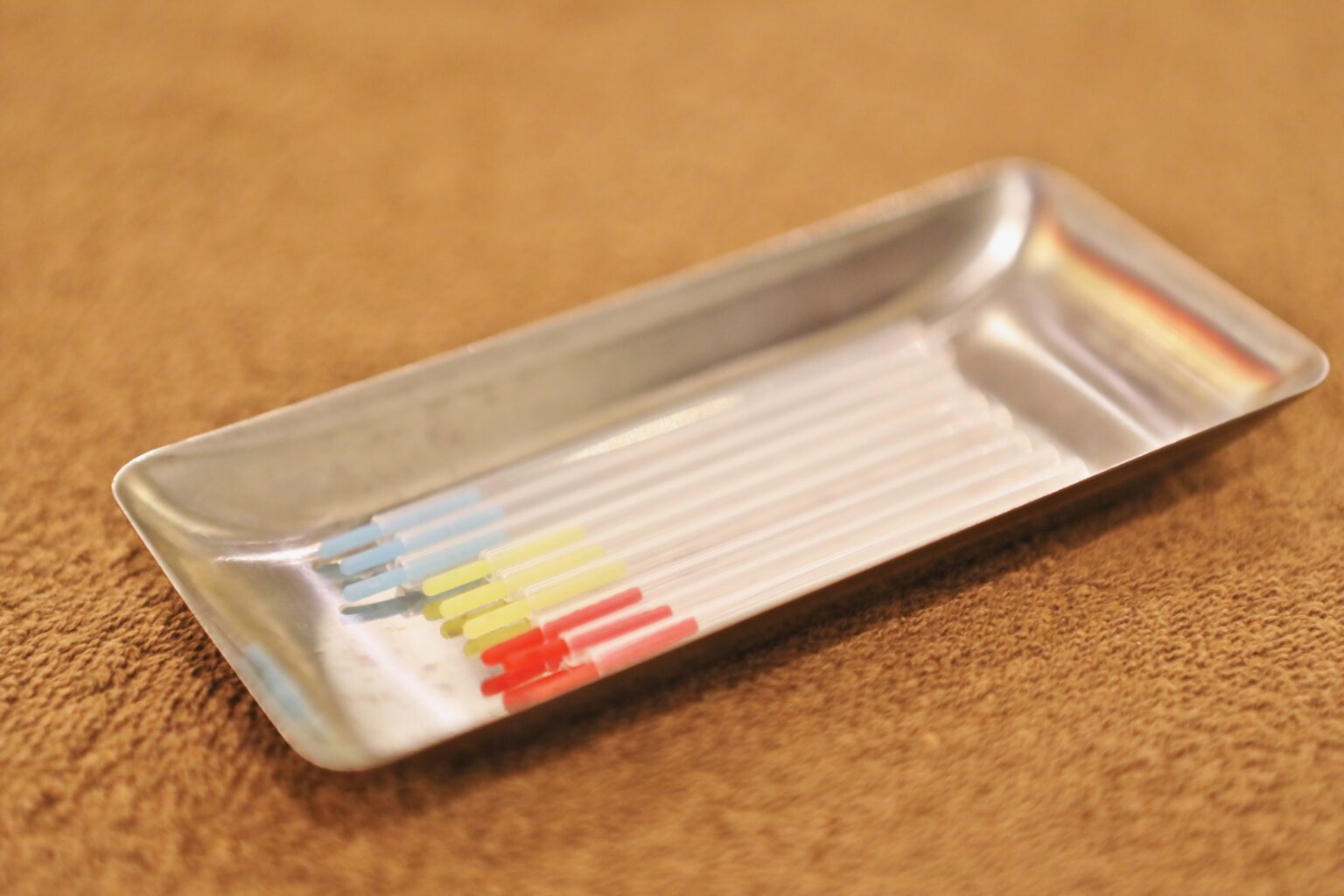
With the tube — Washin
- The tube rests on the exact point first, so the needle lands where intended
- The tube supports the needle, so a very thin needle won’t bend going in — which means less pain
- A thin needle also allows for finer, more delicate control once it’s in the muscle
Without the tube — Chinese-style
- A thin needle would bend when inserted by hand without support
- So a thicker needle is used instead — which is more likely to cause pain going in
- A thicker needle also tends to give a rougher, less precise stimulation
I use Washin’s guide-tube method, with fine, single-use disposable needles. I also never press directly on a painful point first — I begin with a very light stroking technique called keisatsu (軽擦) to feel the condition of the skin and fascia before going any deeper. The treatment is built from what the hand actually finds, not from a fixed routine.
Trigger Points, Treated with Washin
A tight knot in the muscle can send pain somewhere else entirely.
Much of my work is built around trigger point therapy: finding the small, taut knots inside a muscle that refer pain to another part of the body — a knot in the shoulder that produces a headache, for example. This is a Western, anatomical way of describing pain, and I combine it with the Japanese approach above: light contact first, then precise needling or pressure directly into the knot once I have confirmed it reproduces your familiar pain.
I do not promise that any condition will be cured. What I aim for is a real, feelable change in how the muscle and the area around it behave, within the time we have together.
For a Single Visit, I Recommend 90 Minutes
Most of my patients come weekly or monthly, over months. You likely cannot.
If you are visiting Fukuoka for a short time, one appointment is probably all we will have. In that case, I recommend the 90-minute course, which gives time for a proper conversation about your health, a full-body shiatsu massage, and acupuncture — rather than rushing through a shorter, localized treatment. The goal for a one-time visit is a genuine reset: to leave feeling noticeably lighter, not just to have “tried acupuncture.”
90-Minute Course — ¥19,800 (first visit)
Includes an initial consultation, full-body shiatsu massage, and acupuncture tailored to what I find. About two hours total, including paperwork and changing.
Note on the ¥2,200 initial consultation fee. Since this clinic opened, I have tried to look after the people who keep coming back — the multi-visit tickets and this fee both work that way. The fee is waived when you mention our website at booking and intend to continue treatment with me. For a one-time visit — for example if you are travelling from outside Fukuoka Prefecture or from overseas — the fee applies, so a 90-minute first visit comes to ¥19,800. The online booking system may show ¥17,600, which does not include this fee; the final amount is confirmed at check-in.
Payment — Cash Only
Please bring Japanese yen in cash.
I am not able to accept credit cards or electronic payment at this time.
Health insurance from outside Japan cannot be used here. Treatment is private-pay for everyone, Japanese and international patients alike.
About Me
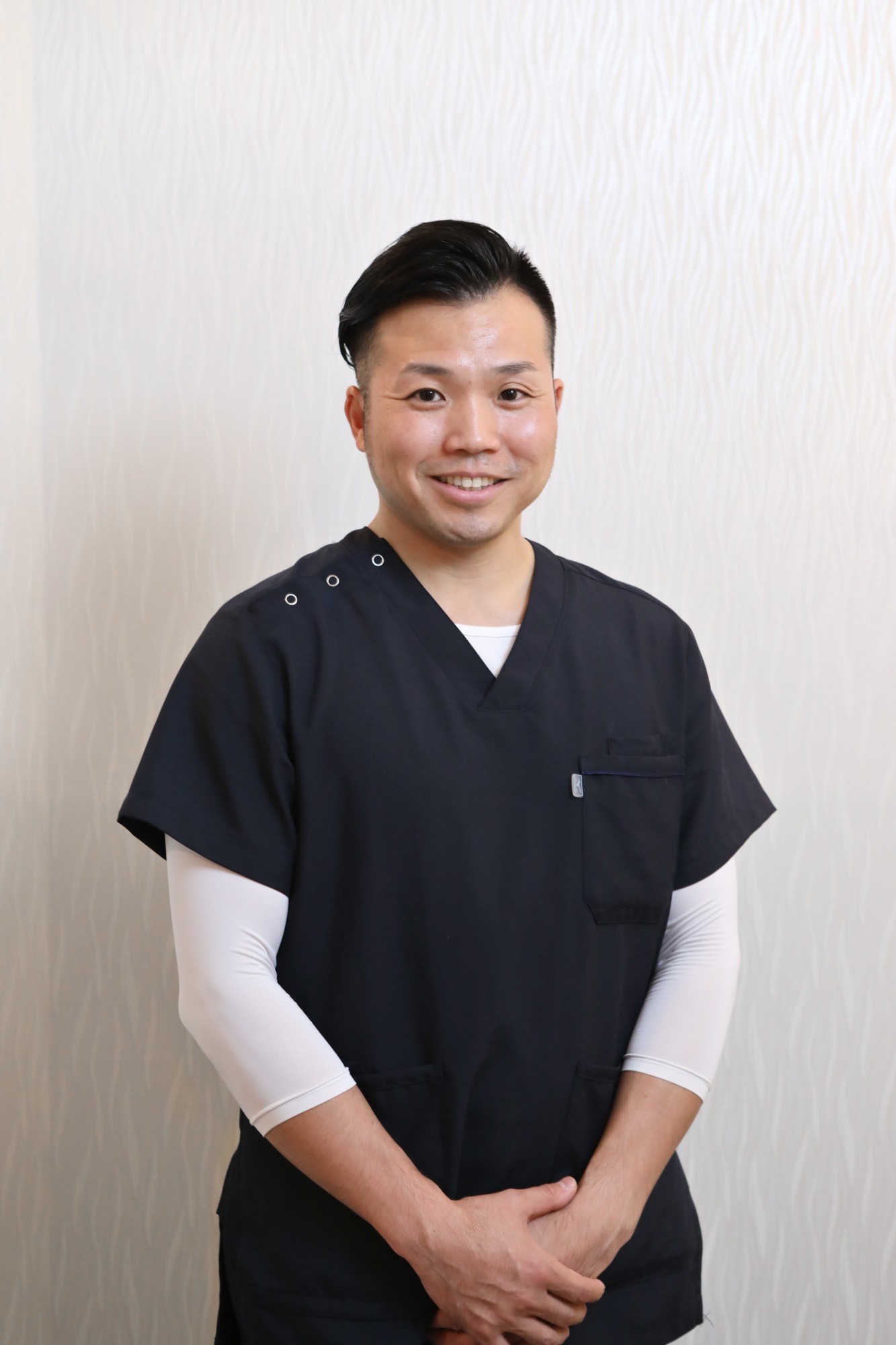
My name is Daiki Yoshimura. I hold four national licenses in Japan: Acupuncturist (Hari-shi), Moxibustionist (Kyu-shi), Certified Massage Therapist (Anma-Massage-Shiatsu-shi), and Judo Therapist (Jyuudoseifukushi). I have practiced for 24 years. I am a member of the Japan Fibromyalgia and Chronic Pain Society, and this clinic is registered in the society’s clinical treatment network.
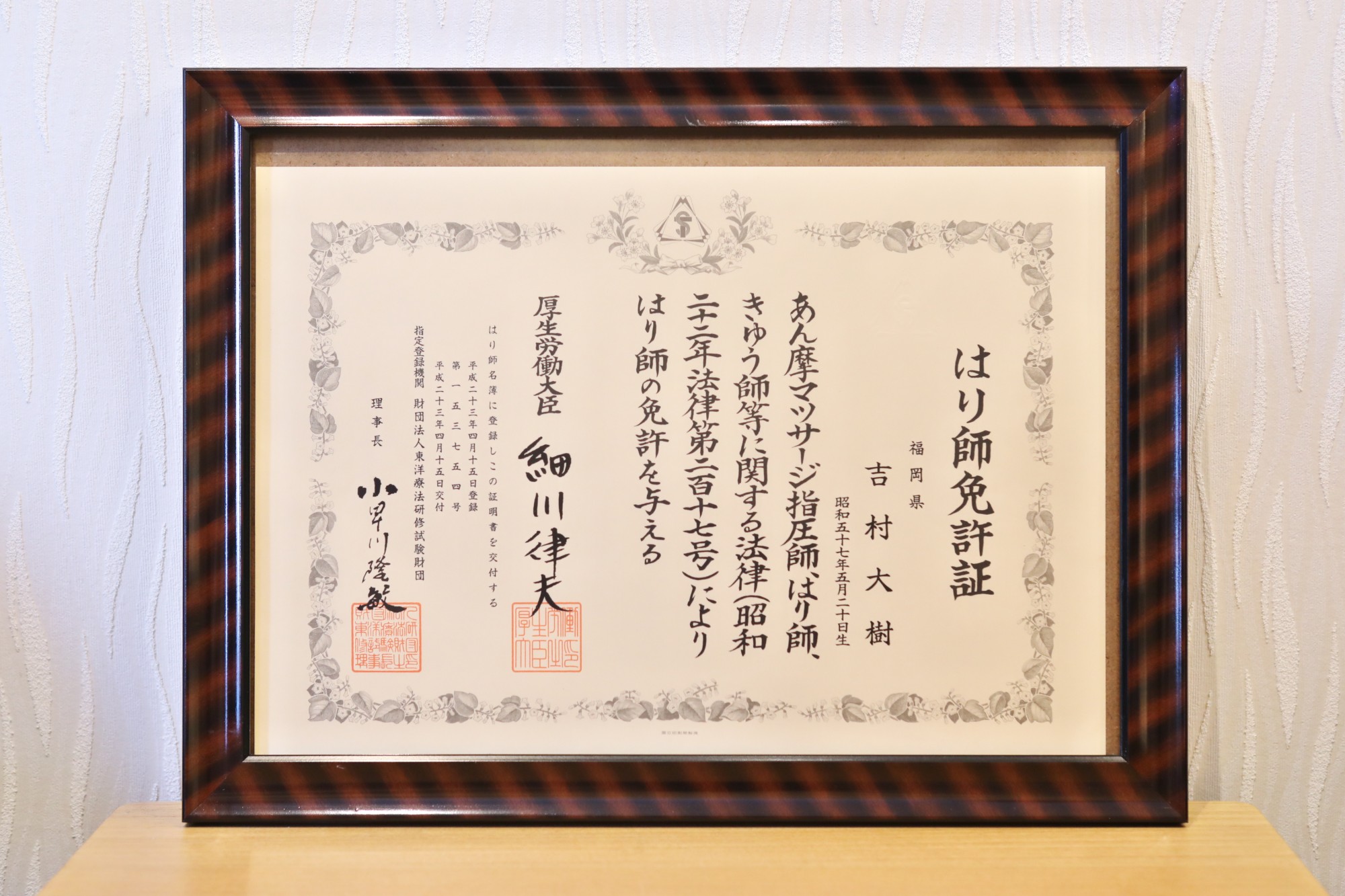
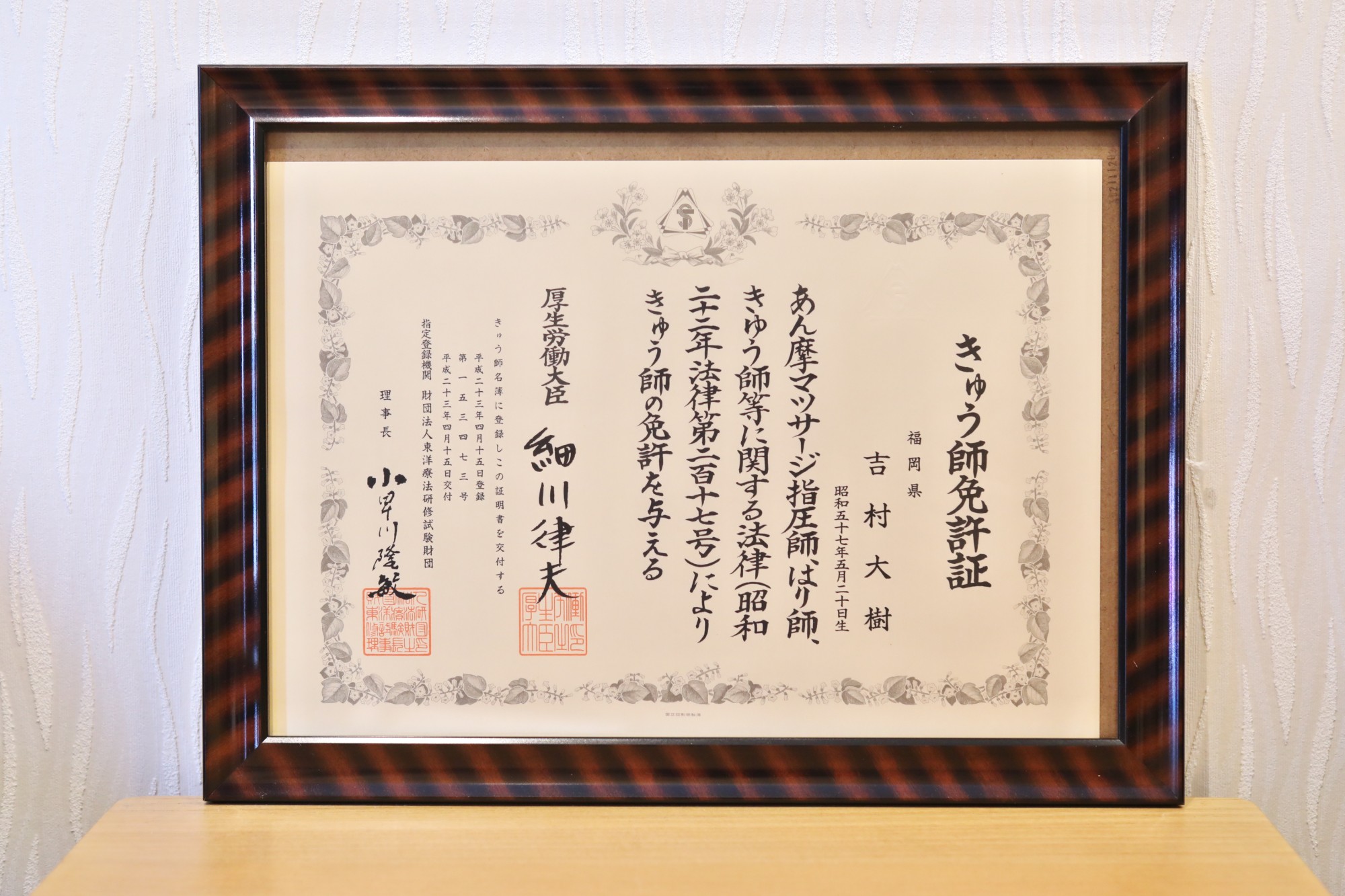
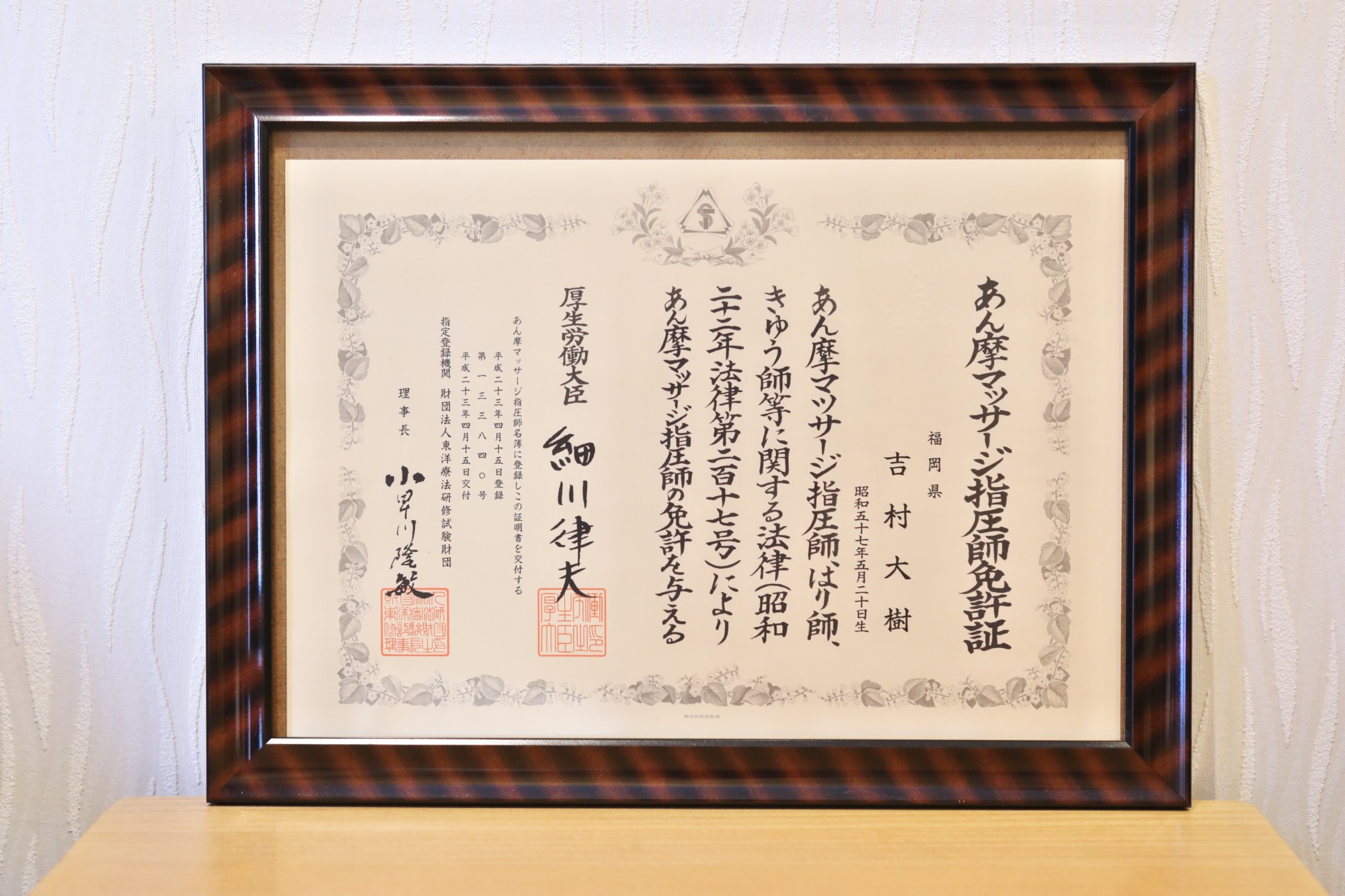
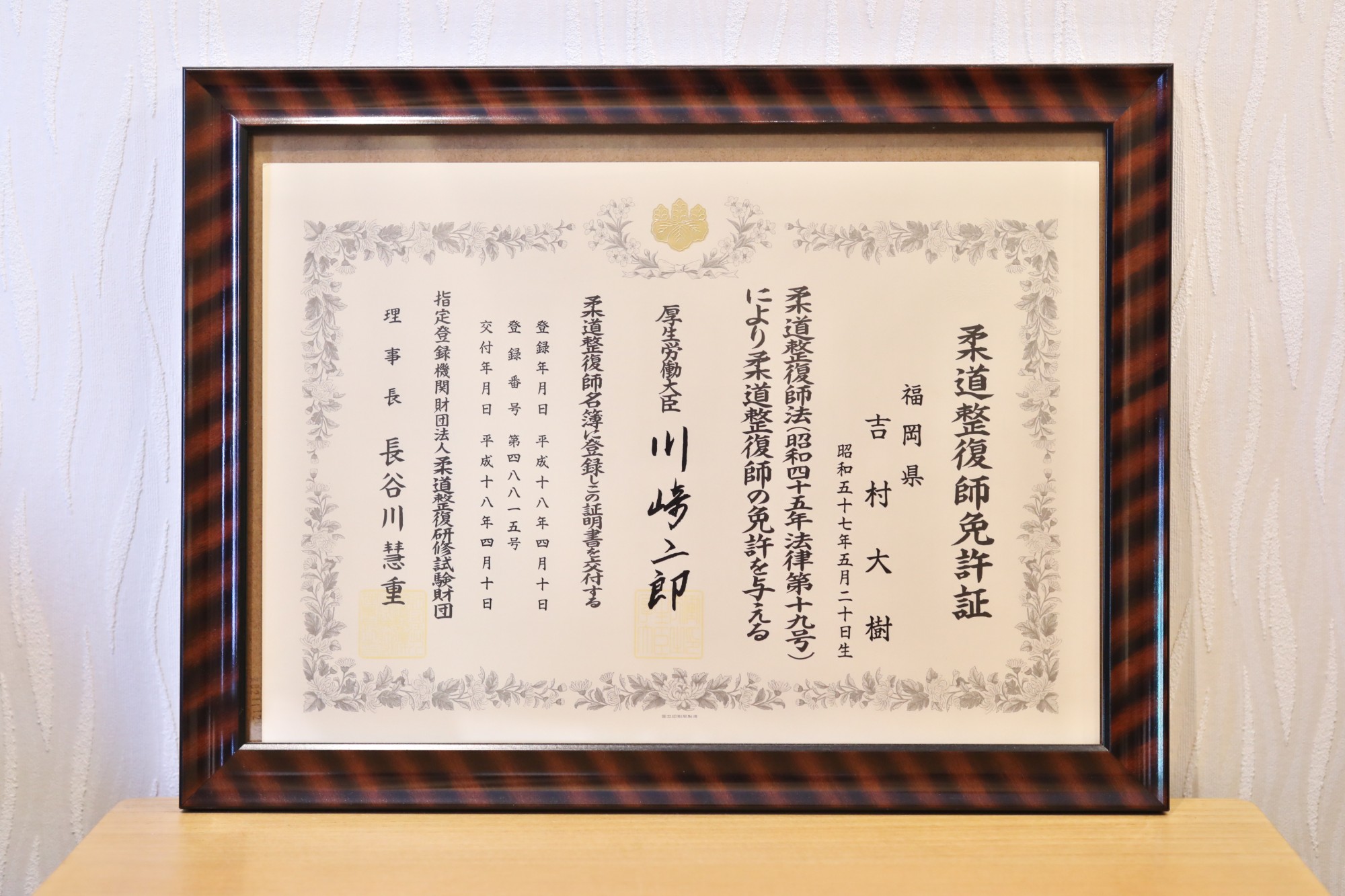
I opened this clinic in Fukuoka to help people whose pain was not fully explained by an X-ray or an MRI — the kind of pain that lives in muscle and fascia, which images cannot show.
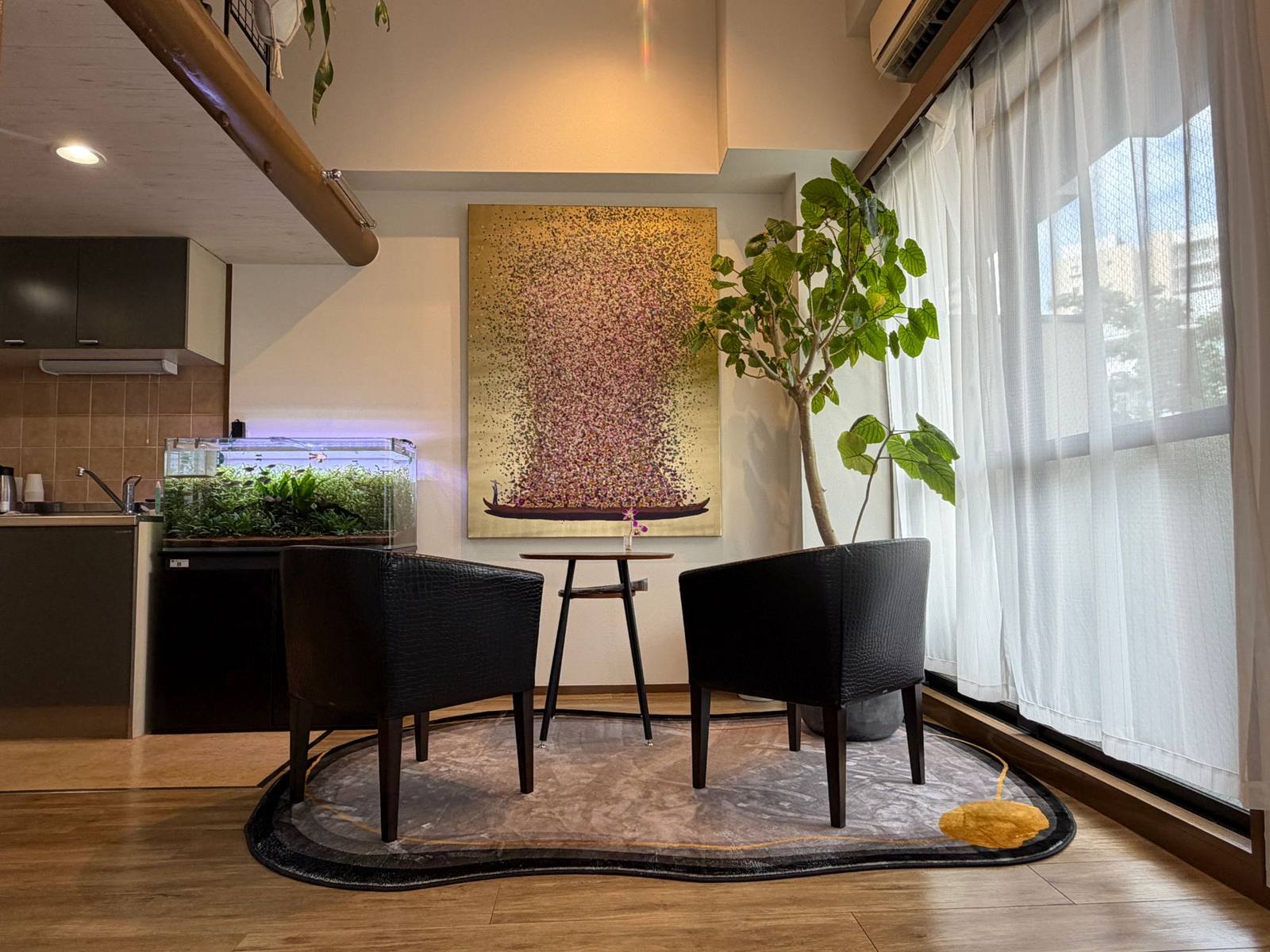
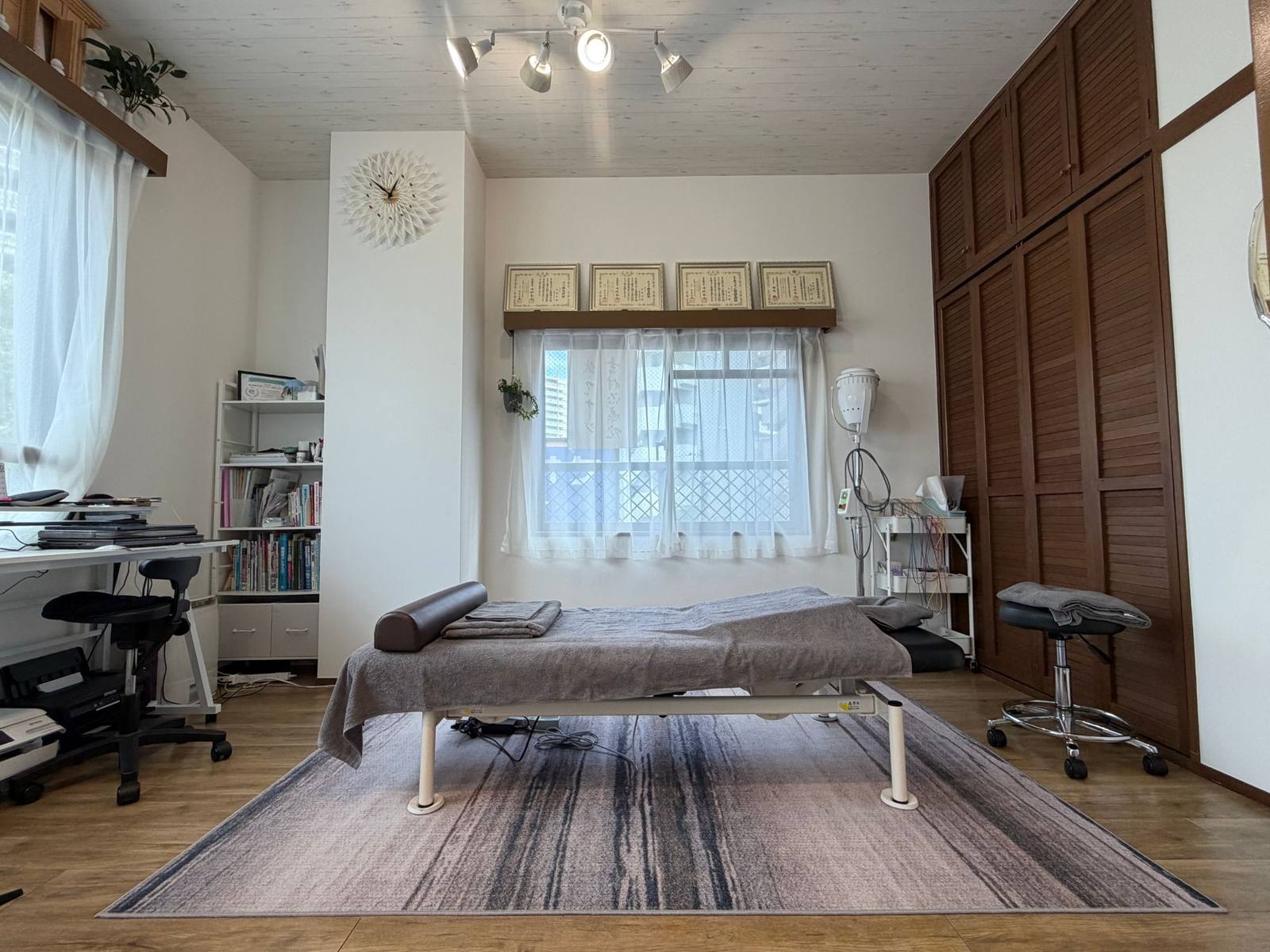
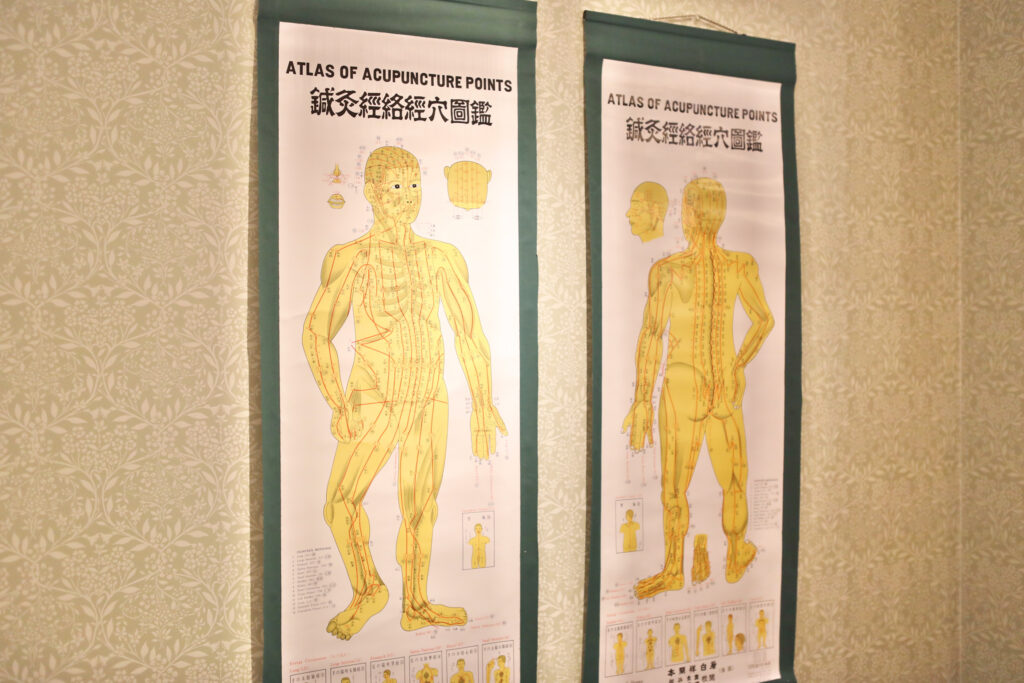
Inside the Clinic
Questions Visitors Often Ask
Q.Do you speak English?
A.A little, not fluently. In the clinic, I will do my best with simple words, gestures, and a translation app if needed. Before your visit, feel free to message me in your own language by LINE or email — I reply using Google Translate, so we can work out the details before you arrive.
Q.Are the needles safe?
A.Yes. All needles are sterile, individually packaged, and used once, then disposed of. This is standard practice for licensed acupuncturists in Japan.
Q.What should I wear?
A.I provide clothing suited for the treatment, and there is space to change. Loose, comfortable clothing of your own is fine too.
Q.I have a medical condition / I am pregnant. Is treatment still possible?
A.In many cases, yes, with adjustments. Please tell me in advance by email so I can prepare properly, or let me know if I should recommend you see a doctor instead.
Q.Can I shower or take a bath after treatment?
A.Yes to both — and I’d actually recommend a bath if you can. Japan has a long tradition called toji (湯治), healing through hot-water bathing. Soaking improves circulation, encourages the body to produce heat-shock proteins that support repair, and raises your core temperature, which helps immune function. A shower is fine too. The only thing I’d avoid right after a session is anything extreme, like a very long sauna.
Q.Can I drink alcohol after treatment?
A.Yes, but go easy. Treatment improves circulation, so alcohol tends to reach you faster and stronger than usual afterward.
Q.How do I book?
A.Please see the booking options below. Several overseas visitors have successfully booked through my online calendar, even though the page itself is in Japanese — but writing to me directly by LINE or email works just as well, and you’re welcome to write in your own language.
Before You Visit
I do not take walk-ins. Please contact me first, by whichever method is easiest for you.
A few days’ notice is a great help — appointments are limited, and I prepare for each patient individually. When you reach out, please include the following:
- Name
- Age
- Gender
- Nationality
- The symptom or concern you’d like treated
- Any requests (preferred date/time, etc.)
Online Calendar
The page is in Japanese, but the calendar itself is simple to read — pick an open slot and enter your name and contact details.
LINE or Email, in Your Own Language
Feel free to message me in your native language, by LINE or email. I read your message and reply using Google Translate, in your own language, so please forgive me if my reply reads a little unnatural — the meaning will still come through.
Location & Hours
Yoshimura Acupuncture & Massage Clinic
Fit Yakuin Bldg. 301, 2-14-21 Yakuin, Chuo-ku, Fukuoka
A 5-minute walk from Yakuin-Odori Station (Nanakuma Subway Line)
Hours: Mon, Tue, Thu, Fri 10:00–20:00 / Sat 9:00–18:00
Closed: Wednesday and Sunday
By appointment only.
When You Arrive
Please arrive about 10 minutes before your appointment. If you get there early, there is a café nearby where you’re welcome to wait.
There is an indoor waiting area at the clinic. If you’re coming with someone who isn’t receiving treatment, they are welcome to wait inside with you.